
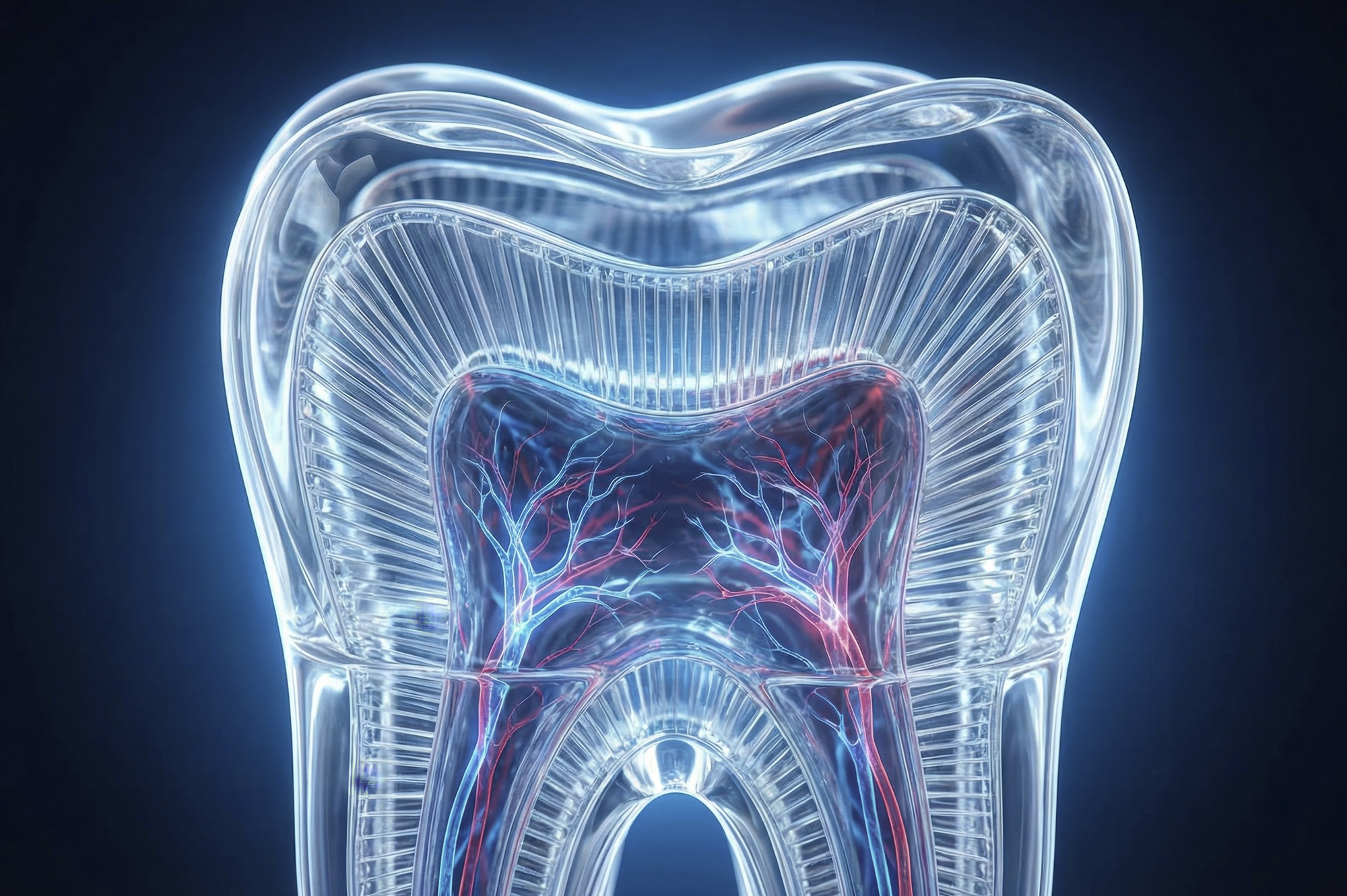
When patients hear the words “You need a root canal treatment,” it often sounds intimidating. In reality, endodontic treatment is a safe, precise and highly effective way to relieve pain and save natural teeth. In today’s blog update, we explain who may need it, what results to expect, why modern imaging such as CT scans matter, and how we perform this treatment at Hitomi Dental.
1. What is Endodontics and who is it for?
Endodontics is a branch of dentistry that focuses on the inside of the tooth – specifically the dental pulp (the soft tissue containing nerves and blood vessels) and the root canal system.
When the pulp becomes inflamed or infected due to deep decay, leaking fillings, severe wear or fractures, or as a result of previous unsuccessful treatment, the tooth may require endodontic treatment to save it from complete destruction and prevent extraction.
Here are the common signs that show you might need endodontic treatment:
・Persistent tooth pain
・Sensitivity to hot or cold that lingers
・Pain when chewing or biting
・A pimple-like swelling on the gum (dental abscess)
Sometimes, there may be no obvious symptoms, and the problem is only detected on an X-ray during a routine checkup.
2. Expected outcomes – is saving the tooth always guaranteed?
Modern endodontic treatment has a high success rate, often exceeding 85 to 95% when performed under appropriate conditions. Most treated teeth can function normally for many years – and often a lifetime – especially when restored properly with a crown afterward.
However, it is important to understand that no medical or dental procedure can offer a 100% guarantee. Success depends on many factors such as the extent of infection, root anatomy, presence of cracks and overall bone support. Delay in treatment can reduce the likelihood of long-term success as well.
Unfortunately, in some cases, despite proper treatment, the infection may persist or recur. When that happens, the options may include endodontic microsurgery or tooth extraction and further replacement with an appropriate construction.
3. The importance of CT scans for better diagnostics
Traditional dental X-rays provide valuable two-dimensional information. However, teeth and root canals are three-dimensional structures. This is where Cone Beam Computed Tomography becomes highly beneficial. A CT scan is recommended to detect hidden canals not visible on standard X-rays, identify cracks or root fractures and assess the extent of infection in the surrounding bone. All of the above helps plan treatment more precisely.
4. How is endodontic treatment performed?
After thorough clinical and radiographic examination, the affected area is anesthetized and isolated with a rubber dam that keeps the tooth dry and free of bacteria during treatment.
A small opening is made in the tooth to access the infected pulp and canals. They are then carefully cleaned and shaped with fine endodontic instruments, disinfectant solutions and special endodontic equipment.
At Hitomi Dental, we use top-rate dental operating microscopes for treatment of root canals and deep cavities. These significantly enhance precision and treatment quality. The hard part about root canals is that they can be thinner than a human hair, and many teeth have additional hidden root canals that are not visible to the naked eye. Magnification and enhanced illumination allow the doctors to see fine anatomical details that would otherwise be missed.
5. Any other aces up the sleeve to contribute to better outcomes?
In some of the most complicated cases of root canal inflammation, treatment with a high-frequency laser has proven to be particularly beneficial for removing the decayed tooth tissue.
We are equipped with the Er:Yag model laser from Morita, a renowned Japanese manufacturer of high-precision dental equipment. Treatments with this laser are painless and overall unnoticeable thanks to their very low levels of noise and vibration.
Endodontic treatment is not entirely effortless, as it is almost always a time-consuming process, and in all honesty, not the cheapest kind of dental procedure. However, if you want to try preserving the natural tooth, it is the only way to go.
At Hitomi Dental we do our best to make your healing journey smooth, pain-free and worth the effort.